
Ordering custom silicone products from China is easier when you follow a clear process: prepare your product requirements, choose a reliable manufacturer, confirm the quotation and mold costs, approve a sample, check product quality, and arrange shipping. Working directly with an experienced silicone manufacturer can help importers, wholesalers, and brands control production costs, maintain consistent quality, and develop products that match their markets.
China is an important sourcing destination for silicone kitchenware, baby products, pet supplies, household items, industrial components, and other customized silicone products. However, choosing the right supplier is more important than simply finding the lowest quotation.
This guide explains how to order custom silicone products from China, what information to prepare, how to compare manufacturers, and what to check before placing a bulk order.
Before contacting a manufacturer, prepare a clear description of the product you want to develop.
You do not need a complicated technical document. Even a product photo, drawing, or existing sample can help a manufacturer understand your requirements.
Here is the basic information you should prepare:
| Information | What You Should Provide |
|---|---|
| Product type | Kitchenware, baby products, pet products, household items, etc. |
| Product design | Reference photos, drawings, or 3D files |
| Material | Food-grade silicone, general-purpose silicone, or other required material |
| Size | Length, width, height, and thickness |
| Color | Pantone number or reference color |
| Logo | Printing, embossing, debossing, or other branding |
| Packaging | Individual bags, color boxes, custom packaging, etc. |
| Order quantity | Estimated quantity for your first order |
| Target market | USA, Europe, Russia, or other markets |
| Certifications | Applicable FDA, LFGB, REACH, or other testing requirements |
Practical tip: If you do not have a complete design, send the manufacturer a similar product photo and explain what you want to change. An experienced OEM/ODM manufacturer may help you improve the design and develop a suitable production solution.
Not every supplier advertising silicone products is a real manufacturer. Some companies are trading companies that outsource production to other factories.
For long-term B2B cooperation, it is worth checking whether the supplier has actual manufacturing capabilities.
Here are five important things to investigate:
Factory experience: How many years has the company been manufacturing silicone products?
Production equipment: Does it have its own molding machines and production facilities?
Product development: Can it help with product design, mold development, and samples?
Quality management: Does it have a clear inspection process?
Export experience: Can it communicate effectively and handle international orders?
You can also request factory photos, production videos, certificates, and examples of similar products.
| Comparison | Direct Manufacturer | Trading Company |
|---|---|---|
| Production control | Direct control over production | Depends on partner factories |
| Customization | Usually more flexible | Depends on factory resources |
| Communication | Direct communication with production team | Additional communication layer |
| Pricing | Potentially more competitive | May include additional margins |
| Quality control | Direct factory inspection | Depends on supplier arrangements |
| Product development | Often provides in-house support | May rely on external factories |
A trading company is not necessarily unreliable. However, if you need repeated orders, complex customization, or long-term OEM/ODM cooperation, working directly with a capable manufacturer can make communication and production management easier.
After confirming your requirements, send an inquiry to several suitable manufacturers.
Do not compare suppliers based only on the unit price. A low quotation may exclude mold costs, packaging, testing, or other important expenses.
A complete custom silicone product quotation should include:
| Cost Item | What to Confirm |
|---|---|
| Product unit price | Price per piece at different order quantities |
| Mold cost | Whether a new mold is required and who owns it |
| Sample cost | Sample production and shipping fees |
| Material cost | Material type, color, and special requirements |
| Packaging cost | Standard or customized packaging |
| Testing cost | Required product testing and certification |
| Shipping cost | Air, sea, express, or other delivery options |
| Production lead time | Estimated time for mass production |
Several factors determine the final manufacturing cost:
Product size and weight: Larger products generally require more silicone material.
Product structure: Complicated shapes and multiple components may increase production costs.
Mold design: Complex molds and multiple cavities can increase initial tooling costs.
Material requirements: Food-contact requirements, special colors, and specific material properties can affect pricing.
Order quantity: Larger orders may reduce the unit cost because setup and mold expenses can be distributed across more products.
Packaging requirements: Custom boxes, labels, and branded packaging add extra costs.
Buyer tip: Ask for quotations at several quantities, such as 500, 1,000, and 3,000 pieces. This helps you understand how order volume affects the unit price.
For a completely new silicone product, a production mold may need to be developed before mass production.
The mold is one of the most important parts of custom silicone manufacturing because it determines the product's shape, dimensions, and many appearance details.
A typical mold development process includes:
Confirming product drawings or reference samples.
Reviewing the product structure and manufacturing feasibility.
Confirming mold design and quotation.
Manufacturing the mold.
Producing the first samples.
Checking dimensions, appearance, and function.
Making adjustments if necessary.
Before paying for a mold, clarify:
Is the mold cost a one-time payment?
Does the mold belong to the buyer after payment?
Where will the mold be stored?
Can the mold be used for future repeat orders?
Are mold modifications included in the quotation?
What happens if the first sample does not meet the requirements?
Important: Make mold ownership and usage rights clear in your written agreement. Do not assume that paying the mold fee automatically settles every issue related to ownership, storage, and future use.
Never rush into a large order without checking a sample.
A sample allows you to confirm whether the actual product matches your design and business requirements.
When evaluating a silicone sample, pay attention to the following:
| Inspection Item | What to Check |
|---|---|
| Appearance | Surface finish, color consistency, and visible defects |
| Dimensions | Whether the size matches the approved drawing |
| Material | Whether the material matches the agreed specification |
| Flexibility | Whether the product has the required softness and elasticity |
| Odor | Whether there is an unusual or strong smell |
| Function | Whether the product performs as intended |
| Logo | Whether the logo position and appearance are correct |
| Packaging | Whether the packaging meets your requirements |
For food-contact products, baby products, or other regulated applications, request relevant test reports and confirm that the testing applies to the actual finished product and intended use.
For example, a supplier's raw-material document does not automatically prove that the finished product meets every applicable food-contact requirement.
Best practice: Keep an approved sample as your reference standard. Use it to compare the products during mass production and future repeat orders.
A reliable manufacturer should have a quality control process rather than checking products only after production is completed.
Before placing your order, discuss how the factory will inspect your products.
A practical quality control process may include:
Raw material inspection before production.
Mold and production condition checks.
Appearance inspection during manufacturing.
Product dimension checks.
Functional testing where applicable.
Final inspection before packing.
Quantity and packaging verification.
For large orders, buyers can also arrange an independent third-party inspection before shipment.
The inspection requirements should be agreed upon in advance, including acceptable defect levels, inspection quantities, and the procedure for handling rejected products.
Buyer tip: Ask the manufacturer to provide actual inspection photos or videos. This gives you a clearer understanding of how quality is managed during production.
MOQ means Minimum Order Quantity. It is the minimum number of products a manufacturer is willing to produce for one order.
There is no universal MOQ for custom silicone products. It depends on the product design, mold structure, material, color, production process, and packaging requirements.
| Order Type | MOQ Considerations |
|---|---|
| Existing silicone products | May have a lower MOQ |
| Custom color products | Depends on material preparation and production arrangements |
| Custom logo products | Depends on the branding method |
| New custom silicone products | Usually requires mold development and a production quantity agreement |
| Complex OEM/ODM projects | Depends on design, tooling, and manufacturing requirements |
The total project timeline usually includes several stages:
| Production Stage | What Happens |
|---|---|
| Requirement confirmation | Design, material, size, and quotation |
| Mold development | Mold design and manufacturing |
| Sample production | First sample and modifications |
| Sample approval | Buyer confirms the final sample |
| Mass production | Manufacturing the confirmed quantity |
| Inspection and packing | Final quality checks and packaging |
| Shipping | Transportation to the destination |
The actual timeline depends on product complexity, mold development, sample revisions, order quantity, and factory capacity.
Ask your supplier for a separate estimated timeline for mold development, sampling, and mass production instead of accepting one general delivery estimate.
Payment terms should be agreed upon before production begins.
For example, some manufacturers use a deposit before production and the remaining balance before shipment. The exact arrangement depends on the supplier, order value, and business relationship.
Always confirm the payment schedule, production milestones, and delivery conditions in a written purchase order or contract.
Once production and final inspection are completed, the next step is international shipping.
The most common shipping methods are:
| Shipping Method | Advantages | Suitable For |
|---|---|---|
| Express Courier | Fast delivery and convenient tracking | Samples and small orders |
| Air Freight | Faster than sea freight for larger shipments | Urgent commercial orders |
| Sea Freight | Usually more economical for larger volumes | Bulk wholesale orders |
| Railway Freight | An option on suitable international routes | Certain China-Europe shipments |
The best shipping method depends on your order quantity, delivery deadline, destination, and total transportation cost.
Incoterms define important responsibilities between buyers and sellers, including transportation arrangements, costs, and when shipping risks transfer.
Common terms include:
EXW: The seller makes the goods available at the agreed location, usually the factory.
FOB: The seller delivers the goods on board the nominated vessel at the named port.
CIF: The seller pays the cost, insurance, and freight to the named destination port, subject to the agreed rule.
DAP: The seller arranges delivery to the named destination, while the buyer generally handles import clearance and duties.
DDP: The seller takes responsibility for delivery with import clearance and duties paid, subject to applicable legal and practical requirements.
These terms are not interchangeable. Always specify the named place or port and the Incoterms version in your quotation or contract.
For example, Incoterms 2020 provides 11 internationally recognized trade rules. The International Chamber of Commerce explains how these rules allocate costs, risks, and responsibilities between buyers and sellers.
For your first order, discuss shipping options with both your manufacturer and a freight forwarder. Confirm customs clearance, import duties, taxes, and any product-specific requirements before shipment.
After receiving the products, inspect the shipment against your purchase order and approved sample.
Check:
Actual quantity received.
Product appearance and dimensions.
Color and material consistency.
Logo and packaging accuracy.
Shipping damage.
Any defects or missing items.
If you find problems, take clear photos or videos and contact the supplier promptly.
For long-term cooperation, keep the approved product specifications, mold information, packaging files, inspection records, and previous order details. These records make repeat orders easier and help maintain consistent product quality.
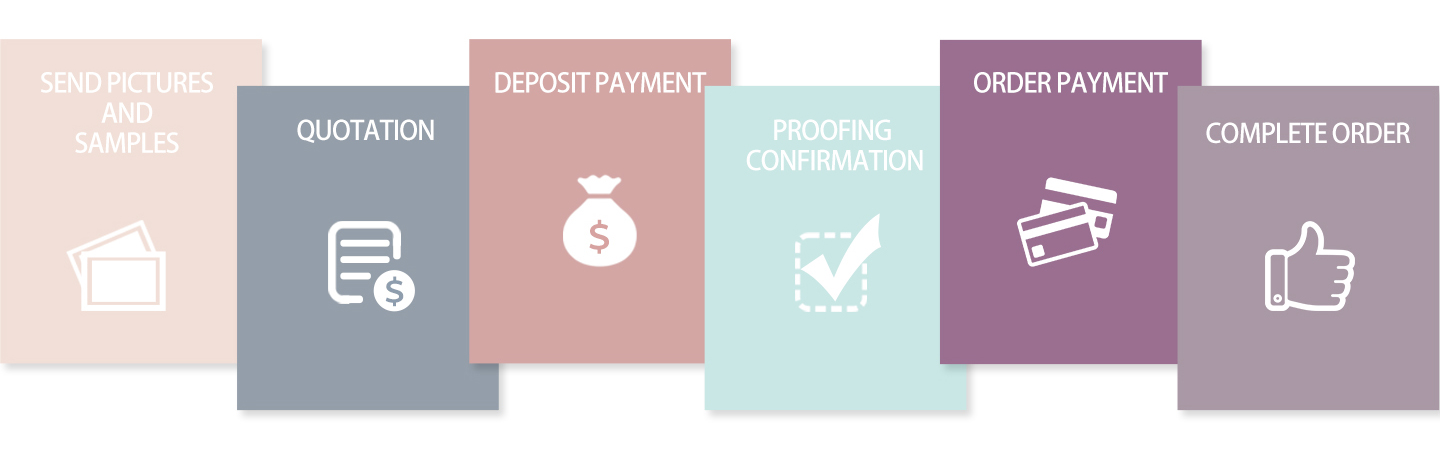
If you are contacting a factory for the first time, you can use the following inquiry template to get a more accurate quotation.
Subject: Inquiry for Custom Silicone Products – OEM/ODM Manufacturing
Hello,
We are looking for a reliable manufacturer in China for custom silicone products.
Please find our initial requirements below:
Product name: [Your product name]
Product design: [Photos or drawings]
Material: [Required silicone material]
Size: [Product dimensions]
Color: [Required color]
Logo: [Yes/No]
Packaging: [Required packaging]
Estimated quantity: [Order quantity]
Destination country: [Your country]
Could you please provide the following information?
Unit price at different order quantities.
MOQ for custom production.
Mold development cost, if required.
Sample cost and lead time.
Mass production lead time.
Available certifications and relevant test reports.
Shipping options to our destination.
We look forward to your quotation and further cooperation.
Best regards,
[Your Name / Company]
Kangde Silicone is a China-based silicone products manufacturer specializing in B2B wholesale, OEM, and ODM manufacturing.
With more than 23 years of manufacturing experience, Kangde provides integrated services covering product design, mold development, prototyping, mass production, branding, and packaging.
Our manufacturing capabilities include:
25+ automated compression molding production lines.
A 300㎡ product research and development center.
More than 10 experienced product designers.
Over 200 new product developments annually.
A 12-step quality inspection process.
A wide range of silicone kitchenware, baby products, pet supplies, household products, and customized silicone components.
We support importers, distributors, wholesalers, and brands looking for factory-direct silicone products and long-term manufacturing partnerships.
Whether you need an existing product with custom branding or a completely new silicone product developed from your idea, our team can help you move from concept to production.
Visit our website: https://www.kangdesilicone.com/
Contact: sales@kangdesilicone.com
First, prepare your product design, material requirements, dimensions, colors, and estimated order quantity. Contact a reliable silicone manufacturer, request a quotation, confirm the mold and sample, approve the final design, and then arrange mass production and shipping.
Yes. Many OEM/ODM manufacturers can help develop a product from reference photos, sketches, existing samples, or a basic product idea. The manufacturer can discuss design improvements, mold development, and production feasibility with you.
MOQ varies depending on product size, design complexity, material, color, mold structure, and production method. Existing products may have lower minimum quantities, while completely new customized products generally require a separate production arrangement.
There is no fixed price. Mold costs depend on product dimensions, design complexity, number of cavities, mold structure, and production requirements. Request a separate mold quotation and confirm ownership, storage, and future usage rights before placing an order.
The timeline depends on whether a new mold is required, how many sample revisions are needed, and the production quantity. Ask your supplier to estimate mold development, sample approval, mass production, and shipping separately.
Yes. Many manufacturers provide OEM services based on customer drawings or specifications, as well as ODM services that include product design and development. Always confirm which design and development services are available in-house.
Request a pre-production sample and check its appearance, dimensions, color, flexibility, odor, functionality, and packaging. For regulated applications, request appropriate test reports and consider independent third-party inspection before shipment.
You can request products made with materials and manufacturing processes intended to meet the applicable requirements. However, FDA and LFGB are not interchangeable certifications. Confirm the relevant regulations, test methods, product category, intended use, and supporting test reports for your target market.
Yes. Depending on the product and manufacturing process, customization may include embossed or debossed logos, printing, custom colors, product labels, and branded packaging. Confirm the available options and additional costs before sample approval.
For businesses requiring repeated wholesale orders, product customization, and long-term supply, direct factory cooperation can provide better communication with the production team and greater visibility into manufacturing. However, always evaluate the supplier's actual capabilities, quality management, pricing, and export experience.
Ordering custom silicone products from China does not have to be complicated. The key is to prepare clear product specifications, choose a manufacturer with real production capabilities, confirm all costs before production, approve samples, and establish clear quality and shipping requirements.
For importers and brands, the right manufacturing partner is not simply the supplier offering the lowest price. It is the factory that understands your product requirements, delivers consistent quality, communicates clearly, and supports your business as it grows.
If you are planning a new silicone product or looking for a reliable OEM/ODM manufacturing partner, start by sharing your product idea and estimated order quantity with a professional silicone manufacturer.


